DDP Shipping Explained: Delivered Duty Paid for Online Sellers
DDP shipping explained: the seller handles freight, export clearance, import duties, taxes and final delivery. See how Delivered Duty Paid works for sellers.
Daniel R. Whitaker 7 min read
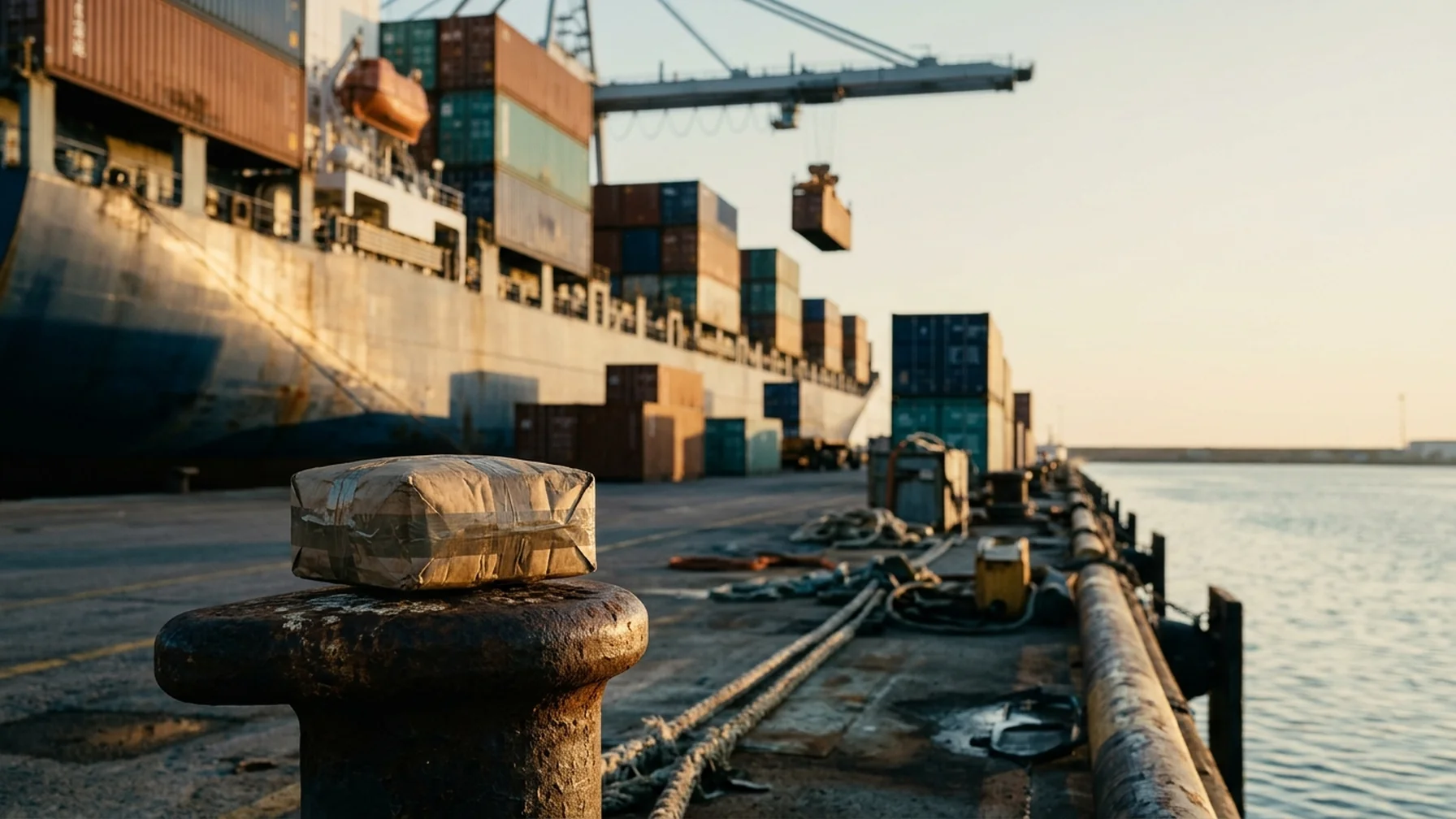
DDP shipping means the seller handles freight, export clearance, import duties, taxes and final delivery to the buyer's door. The buyer pays one price at checkout and receives the parcel with nothing left to settle.
How DDP shipping works, step by step
Delivered Duty Paid is an Incoterm, a standard trade rule published by the International Chamber of Commerce. Under DDP, the seller carries more obligations than under any other Incoterm. Here is what that looks like in practice.
- Quote and collect. At checkout, the seller or the platform calculates the landed price: goods, international freight, duties and import VAT or sales tax. The buyer pays that single amount.
- Export clearance. The seller files the export declaration in the origin country, using a commercial invoice and a Harmonized System (HS) code for each product.
- Transport. The seller books the carrier and stays responsible for the goods until delivery. Risk of loss or damage in transit sits with the seller, unlike in DAP or DDU terms.
- Import clearance. The seller, or a customs broker acting for them, files the import declaration in the destination country and pays duty and import taxes.
- Final delivery. The parcel arrives at the buyer's address with nothing left to pay. The carrier does not collect duty at the door.
The seller usually needs a way to pay import taxes in the destination country. Many sellers use a customs broker, a freight forwarder that offers a duty-paid service, or a merchant-of-record service. Each adds cost and paperwork, and each has different rules about who counts as the importer on record.
Key terms: duty, import VAT and the importer of record
Duty and import VAT are different charges
Duty is a tax on imported goods, set by the destination country and based on the product's HS code and customs value. Import VAT or sales tax is a separate consumption tax charged at the border.
In the United States, the border charge is usually a customs duty, while sales tax is handled at the state level after import. In the European Union and the United Kingdom, import VAT applies to most goods. Rates, thresholds and reliefs differ by country, so confirm the current rules on the official customs website for the destination market before you price a product.
The importer of record carries the legal responsibility
The importer of record is the party legally responsible for the declaration and the tax. Under DDP that is normally the seller or their appointed representative. This matters because the importer of record, not the buyer, deals with customs queries, audits and any refund claims.
DDP vs DDU: who pays the charges at the door
The main comparison sellers ask about is DDP vs DDU. DDU, delivered duty unpaid, is an older term that has largely been replaced by DAP, delivered at place. Under both, the buyer is responsible for import duty, import VAT and customs clearance.
Side-by-side comparison of the obligations
The table below shows where the cost and the customs work land under each term.
| Point | DDP (Delivered Duty Paid) | DDU / DAP (Delivered Duty Unpaid / At Place) |
|---|---|---|
| Who pays duty and import tax | Seller | Buyer |
| Who clears customs | Seller or their broker | Buyer |
| Buyer experience | One price, no doorstep charge | Possible extra bill before delivery |
| Seller risk | Highest; seller bears cost and clearance risk | Lower; buyer bears import risk |
| Refused shipments | Rare, since nothing is owed | More common, with return costs |
In practice, DDU and DAP mean the carrier pays the charges at the border and then bills the buyer before delivery. That produces the familiar "pay the postman" experience. The seller's price looks lower, but the buyer faces an unexpected charge, and refused parcels get returned or abandoned.
Neither term is better in every case. DDP suits consumer parcels where a surprise bill damages trust. DAP can suit business buyers who already clear goods regularly and have their own broker.
How to price a delivered duty paid order
A landed cost calculation is the core of DDP. Work through it before you publish a price.
Build the landed cost in layers
Start with the product cost. Add international freight and insurance. Add any handling or broker fee. Then add duty, calculated on the customs value, which is usually the goods value plus freight and insurance, depending on the country's valuation rules. Add import VAT or sales tax, which applies to the value plus duty. Add last-mile delivery.
Taxes compound here, and that is what most sellers miss. Import VAT is charged on the goods value plus duty, not on the goods value alone. Each layer raises the base for the next one.
A worked example with illustrative numbers
Here is an example with rounded numbers. It is not a real quote, and real rates depend on the product and the destination. A seller ships a jacket with a product cost of $30 and a freight cost of $10. The destination charges 12% duty on a customs value of $40, which is $4.80. Import VAT at 20% applies to $44.80, which is $8.96. Last-mile delivery is $5. Total landed cost is $48.76. The seller needs a selling price above that to make a margin.
Two mistakes are common here. Sellers treat a duty estimate as fixed, when rates and thresholds change. And sellers forget the buffer. Build a small margin for currency moves and rule changes into the price, then review it on a set date.
Common misconceptions about DDP
"DDP means no customs paperwork." It means the buyer sees no paperwork. The seller or broker still files declarations in both countries.
"DDP removes the need for an HS code." The opposite. The HS code drives the duty rate, and a wrong code risks underpayment, penalties and delayed clearance.
"DDP is always the cheapest option." It is often the simplest for the buyer. It also puts all the cost and compliance risk on the seller, and some carriers charge a premium for duty-paid services.
"DDP works the same in every country." It does not. The seller must be able to pay taxes in the destination country, which may require a local entity, a fiscal representative or a merchant-of-record arrangement. Check the destination's rules on the official customs or tax authority site.
Why DDP matters for cross-border sellers
Shoppers abandon checkout when they cannot see the final price, and refused parcels are expensive to recover. DDP removes the surprise bill, which is the most common reason a first international order goes wrong.
There is a trade-off. DDP raises your exposure to duty changes, currency moves and customs mistakes, and it can require tax registration in the destination market. Sellers often start with DDP on high-margin consumer goods and use DAP for bulk business buyers who clear their own goods.
Practical checklist before you offer DDP
Use this list to close the gaps that show up after the first shipment, not before it.
Product and pricing preparation
- Get an HS code for every product and confirm the duty rate in each destination market.
- Build a landed cost sheet that includes freight, duty, import VAT, broker fees and last-mile delivery.
- Add a review date to your pricing so duty and tax changes do not quietly erode margin.
Operations and customs setup
- Decide how you will pay import taxes abroad: broker, forwarder service or merchant of record.
- Confirm who is the importer of record and who handles customs queries.
- Keep the commercial invoice consistent with the declared value and HS codes on every shipment.
Before you scale volume
Test one lane first. Ship a small batch, trace the full chain from export declaration to delivery, and check that your broker's invoice matches your landed cost sheet. Small gaps at low volume become real losses at scale.
This article is general information, not financial, legal or tax advice. Confirm duty rates, thresholds and registration rules with the destination country's official customs or tax authority before you rely on them.